


Understanding Sleep Apnea: Symptoms, Risks & Advanced Treatment Methods
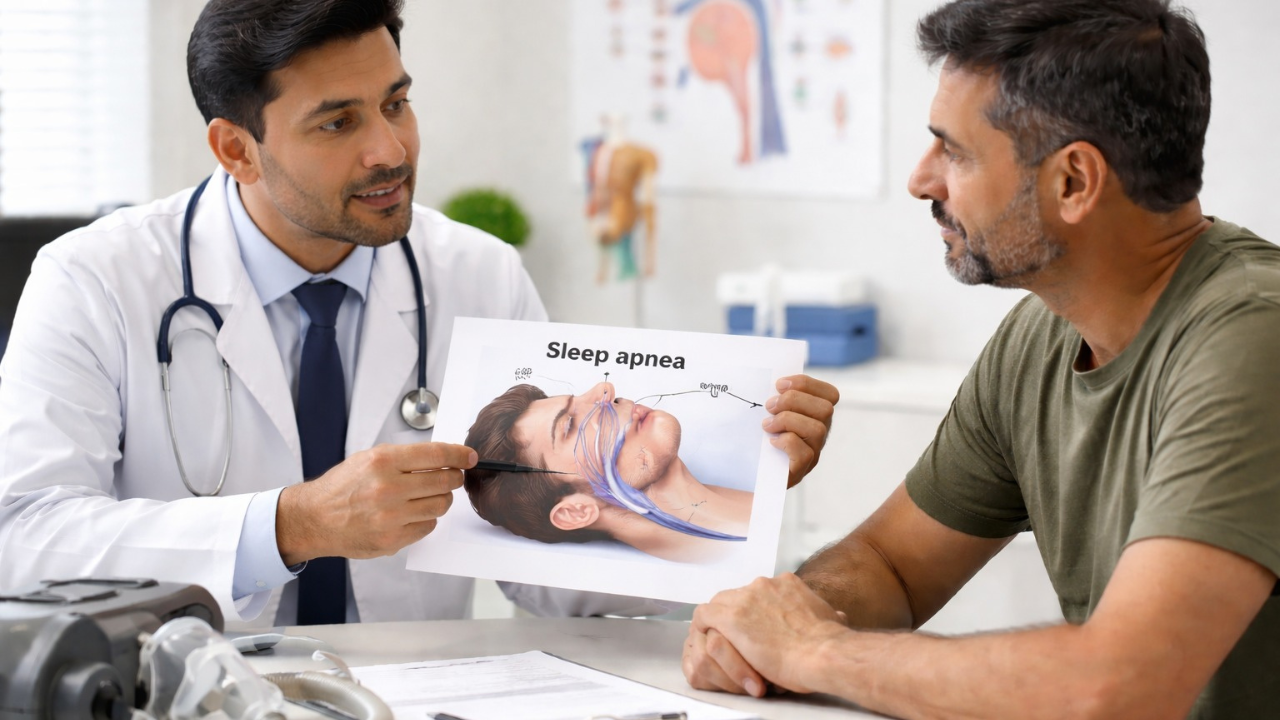
Sleep apnea is a condition where you stop breathing periodically, at night, when you are sleeping. You will mostly gasp awake, as your reflex to start breathing again kicks in- this means you will not be able to sleep restfully and continuously at night. This can stress different organ systems over time and place you at a higher risk of suffering from chronic health conditions. You will need help from a Sleep apnea specialist in Bolarum and Suchitra, in such instances, so call us at Medone Hospitals today, without any delay!
Causes of Sleep Apnea
You can have sleep apnea due to two possibilities- either the brain is not exerting the required amount of control on breathing or you have something blocking the free flow of air- the throat muscles relax too much when you sleep, causing tissue to press down on your windpipe. The first case is called central sleep apnea while the other one is obstructive sleep apnea respectively.
Some people can have both types of apneas, though this is extremely rare.
Symptoms of Sleep Apnea
These are some common symptoms associated with sleep apnea, and they have been described in greater detail below-
- You may snore a lot and very loudly.
- You may breathe in deeply at first and then it may become shallow, until you stop altogether.
- You may have marked pauses between breaths.
- You may gasp and wake up repeatedly at night.
- You may wake up, feeling like you are choking or feeling rally short of breath.
- You may have night sweats and feel very restless.
- You may have headaches and feel really exhausted when you wake up.
- You may feel more depressed or anxious than before.
- Some people may also notice some degree of sexual dysfunction.
If you notice a few or almost all of these symptoms, you should walk in to our hospital for the best sleep apnea treatment in Kompally, Hyderabad.
Diagnosis of Sleep Apnea
Since this condition affects you when you are asleep, your doctor will recommend you get a sleep test done- called a polysomnogram- Here, various sensors measure your heart rate, blood oxygen levels, brain activity and more while you sleep through the night. For this test, you will need to go to a sleep study in a good hospital.
You can do the same test at home, but brain activity cannot be measured. This is also why this method is not advisable, if your doctor suspects that you have central sleep apnea.
For you to get a positive sleep apnea diagnosis, doctors look for something called the apnea/hypopnea index – AHI score. This is where they count how many such events you have in one night- slow breathing or complete pauses are considered.
- If you have a 5-14 AHI score per hour- you have mild apnea.
- 15-29 events per hour- moderate sleep apnea
- 30 or more events per hour- You have severe sleep apnea.
Sleep apnea is chronic and if not treated, it can affect heart and brain function severely.
Treatment for Sleep Apnea
There are several approaches used to treat this condition-
- You will be asked to use a continuous positive airway pressure (CPAP) mask. For more information, visit our CPAP therapy and sleep clinic in Jeedimetla and Balanagar, today!
- You will be asked to take care of underlying conditions which may be causing or worsening sleep apnea and related symptoms.
- You should always sleep on your side and not on the back, so that your airway remains open.
- You may be asked to wear a mouthpiece to keep your mouth open.
- Using a neuromuscular electrical stimulation (NMES) device to make sure your tongue and upper airway muscles don’t block your airway while sleeping.
- You may need surgery in some instances- like jaw surgery or nasal surgery, respectively.
- You may be given medications too.
Conclusion
Sleep apnea does not affect just how you sleep- it can severely impact how you go about your day after you wake up. You may wake up groggy, dry mouthed and have a bad headache and having to wake up like this often can influence your performance at school or work too. It can also be dangerous if you have to drive a lot or work in jobs that require you to be highly alert. Sleep apnea is however very treatable- most people respond well to a combination of approaches, rather than relying on a single one. So, call our specialists to learn more without any delay!
FAQs
Sleep apnea is a condition in which breathing repeatedly stops and starts during sleep. These pauses can last several seconds and may occur many times a night, reducing oxygen levels and disrupting sleep quality.
Common symptoms include loud snoring, gasping or choking during sleep, frequent awakenings, morning headaches, and excessive daytime sleepiness. Some people may also experience difficulty concentrating, irritability, or poor sleep despite spending enough time in bed.
Untreated sleep apnea can increase the risk of high blood pressure, heart disease, stroke, and type 2 diabetes. It can also lead to fatigue-related accidents, reduced productivity, and long-term health complications due to poor oxygen supply during sleep.
Diagnosis is usually done through a sleep study, which monitors breathing patterns, oxygen levels, and heart rate during sleep. This may be conducted in a sleep lab or at home using specialised equipment, depending on the case.
Treatment depends on severity. Common options include continuous positive airway pressure (CPAP) therapy, oral appliances to keep the airway open, and lifestyle changes such as weight management. In some cases, surgical procedures may be considered to remove airway obstructions and improve breathing during sleep.