



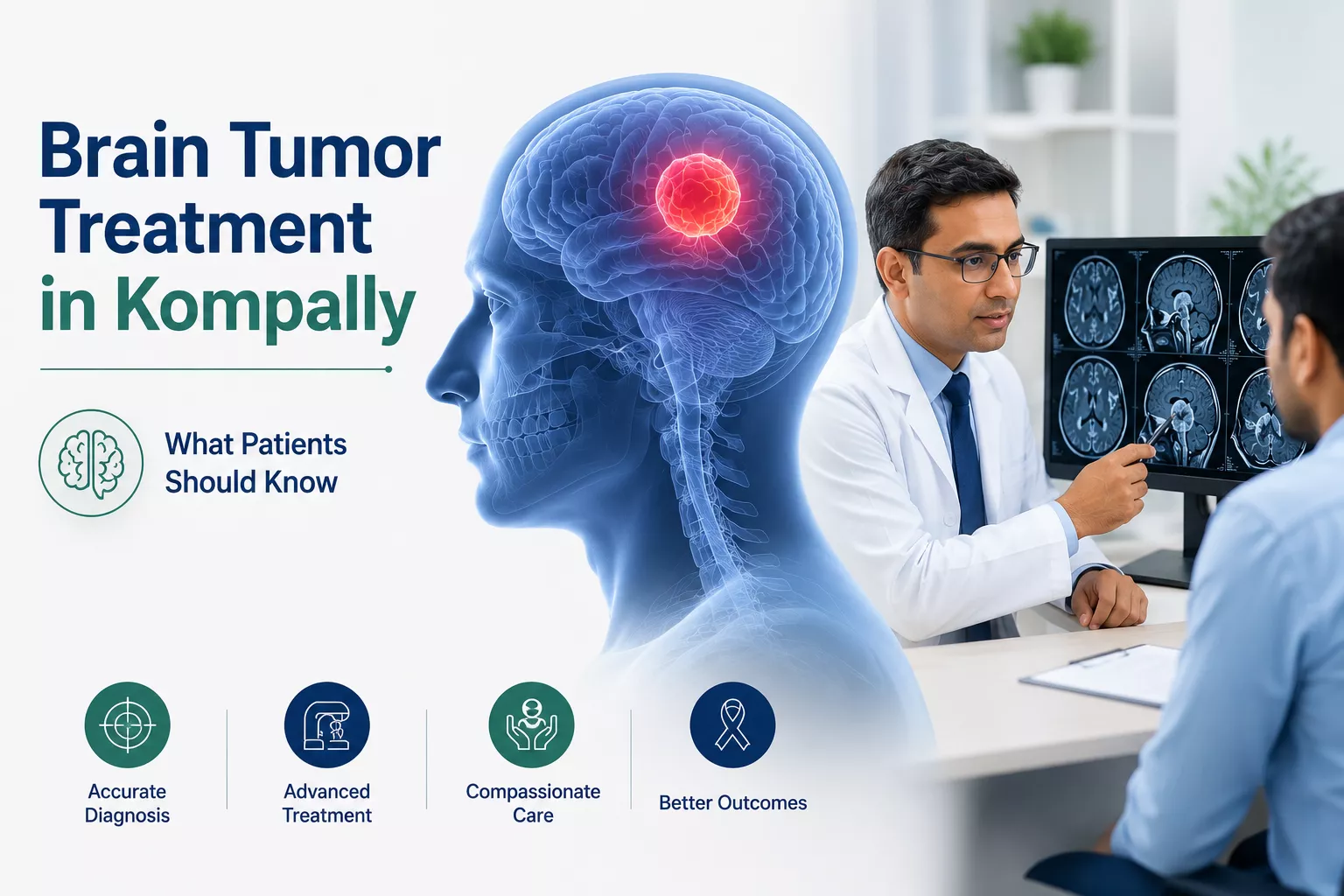
Brain Tumor Treatment in Kompally: What Patients Should Know
Most of us know what cancer is- it is the unregulated growth of specific types of cells that results in the formation of a mass of undifferentiated cells- called a tumor. Since the brain is necessary for so many daily processes and how we function routinely, it needs to be in a highly regulated environment- this is no longer possible with a tumor.
When you notice symptoms like seizures, loss of coordination, vision changes etc., you should consider talking to the best brain tumor specialist in Kompally right away! We have an accomplished and highly experienced neuro-oncology team to help treat this condition.
Types and Causes Of Brain Tumors
Brain tumors are classified into two types- primary and secondary.
- Primary tumors – Ones which form the brain tissue itself or any of its membranes- like gliomas, meningiomas, schwannomas, tumors in the pineal and pituitary gland, gangliomas etc. Many of these tumors can be benign or some can be highly malignant too, depending on the cell type – like a glioblastoma, astrocytoma, ependymomas, oligodendrogliomas.
- Secondary tumors – These form when cancer cells from some other part of the body invade the brain and form a tumor. In this case, it is also called a metastatic tumor.
Research is still being done to understand why some people are at higher risk of developing brain tumors, when compared to others. A genetic component has been identified- certain genes or mutations heighten the risk considerably – like when you have the mutated versions of NF1, NF2, APC, PTCH, TP53 genes, among others, respectively.
Symptoms Of Brain Tumors
The area of the brain the tumor forms in or if it presses against another region and reduces blood flow is what actually causes symptoms like the following-
- You may have really intense headaches which seem really bad when you wake up in the morning or if you wake up suddenly at night.
- If you have seizures and you have never had them before.
- If you have issues with speaking or understanding a language at present, but had no problems before.
- If there are pronounced personality and mood changes.
- If you notice paralysis or weakness on one side of the body- similar to a stroke.
- If your balance and coordination are worse than before.
- If you have tingling or neuropathy.
- If you have issues with smell, hearing, vision or taste.
- If you feel confused or very disoriented.
- If you feel really nauseous all of a sudden.
Diagnosis and Treatment Of Brain Tumors
Doctors will take a look at your symptoms, get a neurological exam done and then opt for detailed imaging- to understand why you have these symptoms in the first place. You may hence get a lumbar puncture or spinal tap to take CSF as a sample, a biopsy of the suspicious mass and a brain CT or MRI scan respectively.
If a specific protein or marker is found in CSF, then doctors may ask you to test for gene mutations or order specific tests to better diagnose you.
Treatment is decided solely based on the location, type of tumor and severity of symptoms.
- If the tumor is benign and located in a place easy enough to access, then neurosurgeons can excise them safely.
- If it is malignant and you are an adult, then you may get radiation therapy, chemotherapy, radiosurgery or other approaches may be used, with surgery.
Treating very young children is much trickier- chemotherapy drugs can alter how their brains develop, so doctors may opt to wait or use another approach altogether – like targeted radiation therapy, surgery etc.
Conclusion
If you notice any of these symptoms, then please get in touch with us at Medone Hospitals, as we are the best Brain Tumor Surgery Hospital in Kompally. We have some of the best specialists in the field, ready to help diagnose and treat you.
Call us today if you have any concerns!
FAQs
Common symptoms include persistent headaches, seizures, vision changes, balance problems, weakness in the arms or legs, speech difficulties, memory issues, and changes in behavior or personality. Symptoms vary depending on the tumor’s size, type, and location within the brain. Any persistent neurological symptom should be evaluated by a specialist.
Diagnosis involves a neurological examination and advanced imaging tests such as MRI and CT scans. Additional investigations may include functional brain mapping, PET scans, or a biopsy to determine the tumor type and grade. Accurate diagnosis is essential for selecting the most effective treatment approach.
Treatment may include surgery, radiation therapy, chemotherapy, targeted therapy, or a combination of these approaches. The treatment plan is based on factors such as the tumor’s location, size, type, grade, and the patient’s overall health. A multidisciplinary team guides treatment decisions to achieve the best possible outcome.
Many benign brain tumors can be completely removed or effectively controlled with treatment. Outcomes for malignant tumors depend on the tumor type, grade, location, and response to therapy. Early diagnosis and timely treatment improve disease control, symptom management, and long-term survival outcomes.
Recovery depends on the type of treatment received, the complexity of the tumor, and the patient’s overall condition. Patients may resume normal activities within weeks after some procedures, while others require longer rehabilitation for speech, mobility, or cognitive functions. Regular follow-up care supports recovery and monitors for recurrence.