


Dehydration Symptoms & How to Stay Hydrated in Summer
Summers in the Indian subcontinent have always been associated with high temperatures, high humidity and an even higher risk of suffering from dehydration and heat stroke. It hence becomes important to stay safe from the punishing sun and hydrate better. So, let us look at some foolproof hydration tips for summer in this blog- which are designed to keep you going without worrying about developing heatstroke or other issues.
What is Dehydration?
Dehydration occurs when more fluid is lost than is being replenished in the body. Water is essential for all physiological functions – like maintaining electrolyte balance, joint lubrication, temperature regulation, as a medium to get rid of wastes and in blood to deliver nutrients to all cells, among others.
Electrolyte balance of potassium, sodium, chloride and other ions are extremely important to ensure that the heart and brain function properly and ensure all organ systems work normally. When more fluid is lost due to sweating and less water is consumed, it can impact not just these organs but the kidney too.
Causes For Dehydration
Dehydration can occur due to greater amounts of sweating to cool the body down, while exercising but not replenishing fluid reserves and even having a fever or diarrhea. Your kidneys may respond by making more urine if you use certain medications like diuretics to manage chronic conditions. Too much caffeine and alcohol can worsen fluid loss too.
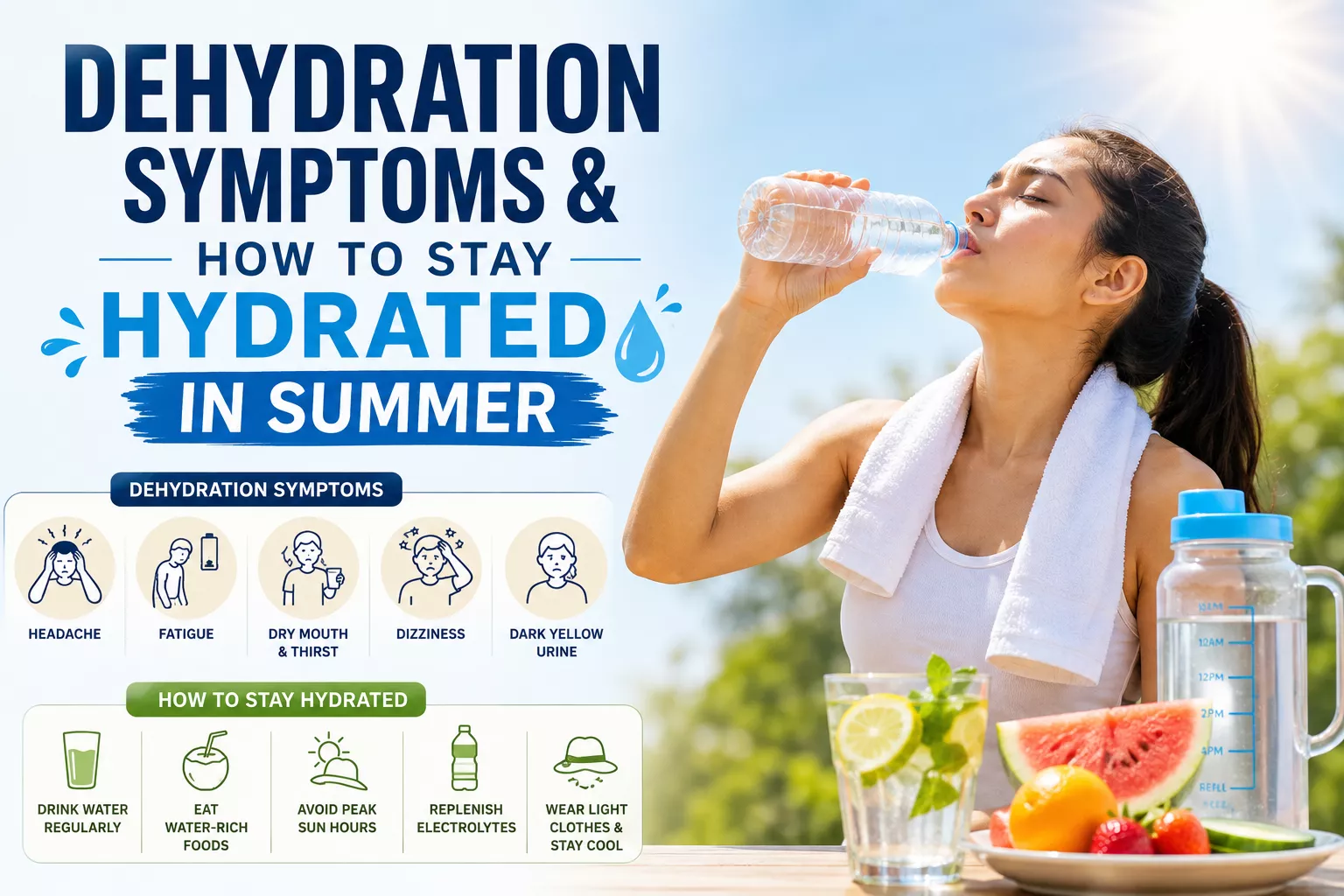
Dehydration Symptoms To Know
These are some symptoms you should pay attention to-
- If your mouth feels more dry or sticky than usual.
- If you feel more tired than usual even with routine tasks.
- If you feel dizzy when you stand up too quickly.
- If your urine output has reduced or it is dark yellow in colour.
- If you develop muscle cramps or headaches and dry skin.
- If you have sunken eyes or high heart rate- this is more severe.
If dehydration symptoms are ignored, then the body may try to cool itself down. If it fails to do so, then core temperature may increase to 40 degrees and this can lead to heatstroke. This is a medical emergency and you will need medical help immediately. Symptoms like dizziness, rapid heart rate or not being able to sweat must never be ignored.
Treatment for Dehydration
You will need to sip on water or unsweetened fluids through the day- every hour or so is a good idea. You can use an ORS solution to replenish electrolytes. You can use fans to cool down and wear clothes that are loose fitting and made of natural fabrics. IV fluids can be given if oral hydration is not possible.
Heatstroke Prevention Tips
Using the right kind of clothing, resting often and in shade and not going out in the sun can help majorly. You should never leave older adults, kids or really anyone in cars and use sunscreen generously. If you notice a high heart rate, faint or dizzy, then you need to try to rest and cool down immediately.
Conclusion
Dehydration is an unfortunate occurrence that affects many individuals. Heat stroke is an extreme condition that needs immediate treatment, as the body is not able to cool down by itself. If left untreated, it can lead to complications like organ failure, coma or even lead to permanent brain damage in severe cases. If you notice any of these symptoms or observe older adults, kids or people with chronic conditions feeling more lethargic than usual, please get them help without any delay. Look out for each other and enjoy summer and all it has to offer in a safe, dehydration free way. Call the best healthcare hospital in Kompally if you want to learn more.
FAQs
Early signs include persistent thirst, dry mouth, reduced urine output, and dark yellow urine. You may also notice fatigue, dizziness, and headache. Skin may feel dry, and lips can crack. These symptoms indicate fluid loss exceeding intake and require prompt rehydration to prevent worsening.
Severe dehydration presents with very little or no urine, rapid heartbeat, low blood pressure, confusion, and extreme weakness. Sunken eyes, dry skin with poor elasticity, and fainting may occur. This stage can disrupt organ function and requires immediate medical attention and rapid fluid replacement.
Adults should aim for 2.5 to 3.5 litres of fluids per day in hot weather, depending on body size and activity level. Increased sweating during outdoor activity or exercise raises fluid requirements. Intake should be spread throughout the day rather than consumed in large amounts at once.
Foods with high water content support hydration, including watermelon, cucumber, oranges, coconut water, and leafy vegetables. These foods also provide electrolytes that help maintain fluid balance. Including them in meals and snacks supports hydration alongside regular water intake during hot weather.
Drink water at regular intervals, even without thirst, and increase intake during outdoor activity. Wear light clothing, avoid direct sun during peak hours, and include electrolyte-rich fluids when sweating heavily. Limiting caffeine and alcohol helps prevent fluid loss and supports stable hydration levels.