



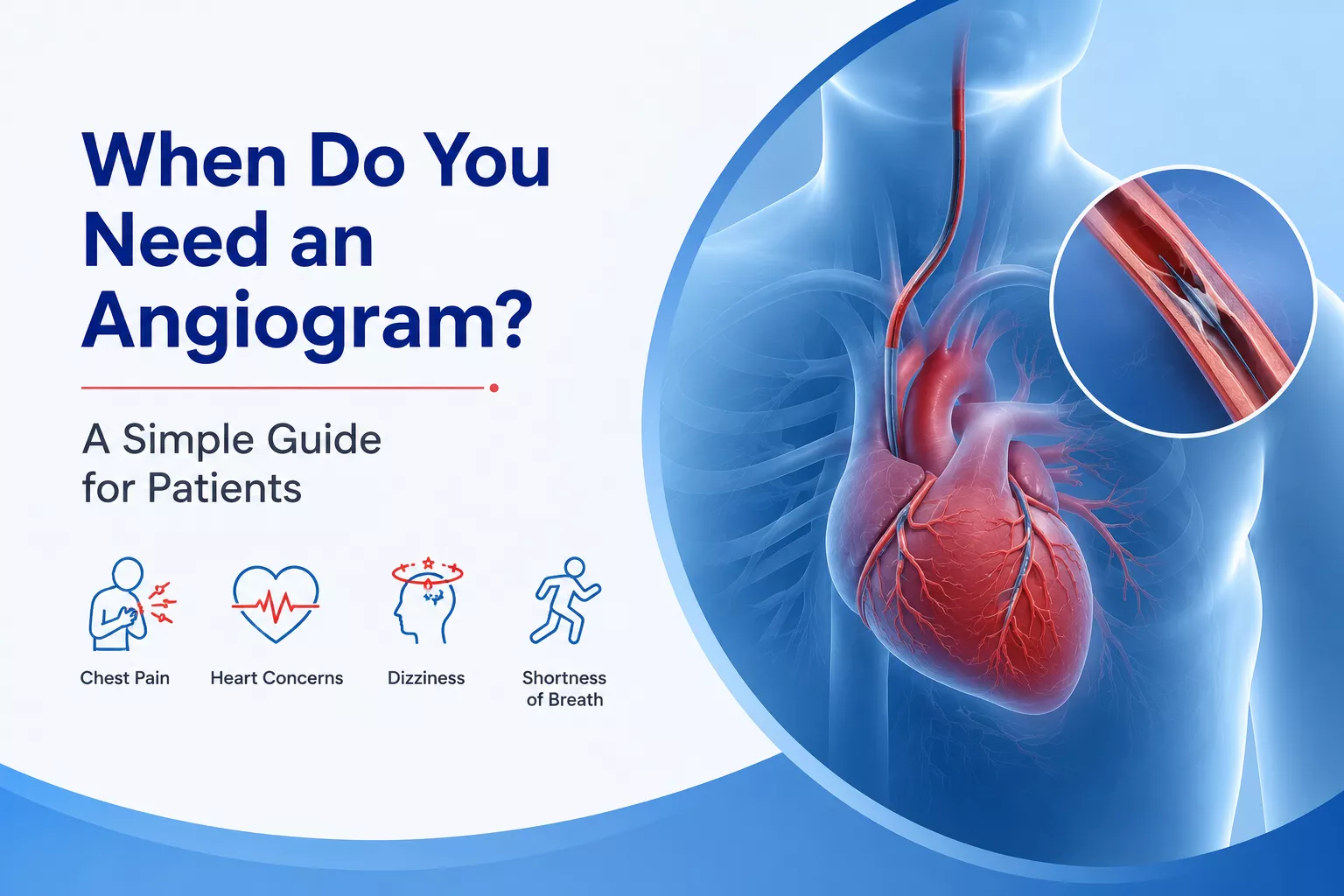
When Do You Need an Angiogram? A Simple Guide for Patients
A coronary angiogram is a diagnostic procedure that is used by doctors or specialists to understand how blood is flowing to, within and from the heart to other parts of the body. This test is normally done to understand if there are any clots or plaques blocking the major blood vessels leading to and away from the heart. An angiogram can also be performed elsewhere on the body to check for clots that occur far away from the heart.
To learn more about your heart health and understand other important parameters, please walk into Medone Hospitals- as we are the Best Angiogram Hospital in Kompally.
What Happens In An Angiogram Test?
Imaging blood vessels is not very easy- so, a contrast material or dye is injected into the blood vessel of interest. Its movement within the blood vessels is easier to image and visualise using an X-ray machine. Most individuals are sedated or anaesthetised when this procedure is done.
How To Prepare For An Angiogram Procedure?
You will be asked to lie down on a bed, so doctors can begin by injecting the dye. Some people may feel warm, have a metallic taste in their mouth or feel slightly nauseous and light-headed, though most people don’t exhibit such symptoms. This dye will only be used if doctors know you are not allergic to the dye.
You should also stop taking some blood thinners or related medications for a few days or hours before the procedure, though other medications can be taken once your doctor says okay. You will also need to fast from the previous midnight, as anaesthesia will be used.
You can drink water or have clear liquids that are dairy free, but nothing else.
Angiogram Procedure Steps
The area of the body where the catheter will make entry after the incision is made, is numbed.
- The catheter is essentially a long, thin tube that is slid over the needle and into the blood vessel- preferably in the groin area. It is then threaded to the area or blood vessel that needs to be studied and imaged in detail.
- Once the catheter reaches the blood vessel in question, the contrast material is injected.
- The technician or doctor will take X-rays and check how the dye is moving in the blood vessels – if they are not moving in the right way, then there is a blockage of some kind present.
What Happens After An Angiogram?
Specialized instruments can be slid in via the catheter to the area of the blockage – like a balloon which is inflated to allow better blood flow in the narrow blood vessel. This is called an angioplasty and most people do well with just this intervention.
If this is not enough, then you may have a stent placed in the affected blood vessel, CABG or heart bypass surgery will be done in a few days or weeks.
Recovery After Coronary Angiography Treatment-
The catheter is carefully removed and pressure is applied to the area where the incision was made- so that blood can clot. You should not move around for at least 15-20 minutes. You can then go home and rest. You should refrain from lifting heavy objects for the next few days and drink plenty of water- so that the kidneys can flush the dye out of your body.
Conclusion
Angiograms are routine tests used to check for vascular health. Very few people have an allergic reaction to the dye and develop other complications. Once a blockage has been found, its severity is also checked. Severe blockages may need more invasive surgery. Minor blockages can be dealt with easily using angiography itself.
Call us at Medone Hospitals to schedule an angiogram today or talk to our experienced cardiologists if you have any other concerns.
FAQs
An angiogram is an imaging procedure that uses contrast dye and X-ray guidance to examine blood flow through the coronary arteries. It helps identify narrowed or blocked arteries that may be causing chest pain, shortness of breath, or other symptoms of coronary artery disease and guides decisions about further treatment.
An angiogram is recommended for people with persistent chest pain, abnormal stress test results, suspected coronary artery disease, symptoms of a heart attack, or unexplained shortness of breath. It is also performed to evaluate the severity and location of arterial blockages before planning angioplasty or bypass surgery.
An angiogram is performed under local anaesthesia, so pain is minimal. Patients may feel brief pressure when the catheter is inserted and a warm sensation when the contrast dye is injected. The procedure usually takes 30 to 60 minutes, and most patients remain awake throughout.
If significant blockages are detected, the cardiologist determines the most appropriate treatment based on their number, location, and severity. Treatment options include medication, coronary angioplasty with stent placement, or coronary artery bypass graft (CABG) surgery for more extensive coronary artery disease.
Patients are advised to avoid eating or drinking for several hours before the procedure, continue or stop prescribed medications as instructed, and inform the doctor about allergies, kidney disease, pregnancy, or blood-thinning medications. Blood tests and other pre-procedure assessments may be completed before the angiogram.