


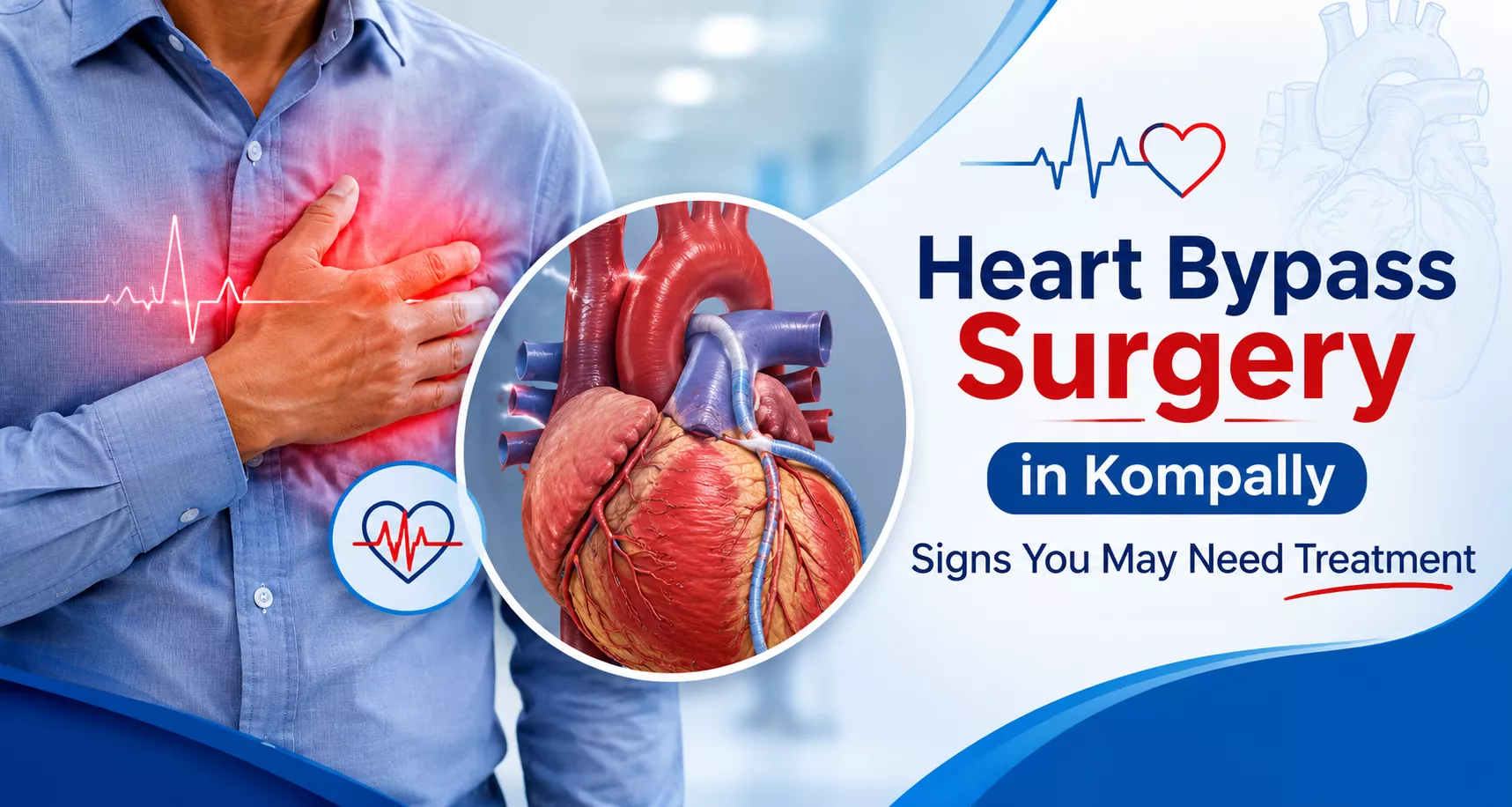
Heart Bypass Surgery in Kompally: Signs That You May Need Treatment
Heart bypass surgery in simple terms is also called coronary artery bypass grafting (CABG). Bypass surgery is needed when blood vessels are not able to supply enough blood to the beating heart. Arteries can get blocked mainly due to the formation of plaques made of cholesterol, or blood clots. You get this surgery done when you are at high risk of having a heart attack or have already had one and to minimise further damage to the heart.
If you have heart disease or hypercholesterolemia, then please get in touch with the best Heart Surgery Specialist in Kompally at Medone Hospital today!
What is Heart Bypass Surgery in Kompally?
The term bypass is used where a piece of blood vessel or artery is taken from some other part of the body and used to construct an alternative pathway for blood to flow in. Such grafts or tube-like blood vessels can be obtained from the arm, leg or chest. You can get one or multiple bypasses made- called single, double, triple or quadruple bypasses respectively.
The main aim of this surgery is to help your heart feel better and beat better, as there is improved blood flow and a low probability of losing precious heart muscle. This procedure is mostly performed on men, when compared to women.
Preparing For A Heart Bypass Surgery
You need to undergo a number of diagnostic tests before you can get this surgery done. Some of the tests that you may be asked to get done in the best Cardiac Surgery Hospital in Kompally include-
- An ECG and/or EKG – electrocardiogram
- Echocardiogram
- Stress test
- Catheterisation of the heart – to understand blood flow in arteries and veins.
- CT Angiography
- Blood tests
- Urinalysis and other tests
CABG Surgery Types
This surgery can be done in different ways-
- Open heart surgery– the most invasive method, where the sternum or the breastbone is cleaved in half and then opened, for access to the heart. The incision is large and you will take longer to heal. A heart lung bypass machine may or may not be used in this approach.
- Off-pump CABG- Your heart is not stopped during the procedure. It keeps beating, while they prepare the graft and suture it in place. A Heart-lung bypass machine is hence not used in this instance.
- Minimally invasive CABG- The incision is much smaller and the sternum is not taken apart, as the surgeon can access the heart in front, between the rib cage. But this procedure is not helpful if the issue is behind or in hard to access spots.
- Hybrid procedure– A robot assisted CABG is done on one affected artery, while the other affected blood vessels may be kept open with stents deployed in place.
Recovery After CABG
You will stay in the hospital for a week or so, to recover. Generally, people stay longer if they have a CABG after a heart attack, rather than those who had the surgery as a preventive measure.
For complete recovery, it will take about 6-8 weeks. Joining a cardiac rehabilitation program can help you improve cardiac and lung health in the long term. It can also help catch any unusual symptoms in the early days of recovery.
Conclusion
Since heart disease is a chronic condition that mainly gets exacerbated due to poor lifestyle choices, it is important to listen to your doctor after the procedure. You need to eat healthy foods which have not been heavily processed, exercise in moderation for a few hours every week and get enough sleep, so your body can recover on a daily basis.
If you have any other concerns or would like a first or second opinion from specialists at the Best Heart Bypass Surgery Hospital in Kompally, please call us at Medone Hospitals today without any delay!
FAQs
Heart bypass surgery may be recommended for people with severe coronary artery disease causing chest pain, shortness of breath, fatigue during physical activity, or symptoms that continue despite medication. Emergency evaluation is required for chest pain lasting more than a few minutes, especially if accompanied by sweating, nausea, or breathlessness.
Cardiologists assess symptoms, medical history, physical examination findings, ECG, echocardiography, stress testing, and coronary angiography. Bypass surgery is recommended when multiple coronary arteries are significantly narrowed or blocked, or when angioplasty is unlikely to provide durable blood flow restoration.
Yes. Treatment depends on the severity and location of the blockage. Lifestyle modification, medications, and coronary angioplasty with stent placement may be suitable for some patients. Heart bypass surgery is advised when blockages are extensive, involve multiple vessels, or cannot be effectively treated with angioplasty.
Untreated coronary artery disease can reduce blood flow to the heart muscle, increasing the risk of heart attack, heart failure, abnormal heart rhythms, and permanent damage to the heart. Early diagnosis and timely treatment help preserve heart function and reduce the risk of life-threatening complications.
Consulting a cardiac surgeon in Kompally allows timely evaluation if you have symptoms of coronary artery disease or confirmed arterial blockages. A specialist can review diagnostic findings, determine whether bypass surgery is required, explain available treatment options, and develop an appropriate plan based on your heart condition.