

Stroke Treatment in Kompally: Why Every Minute Matters
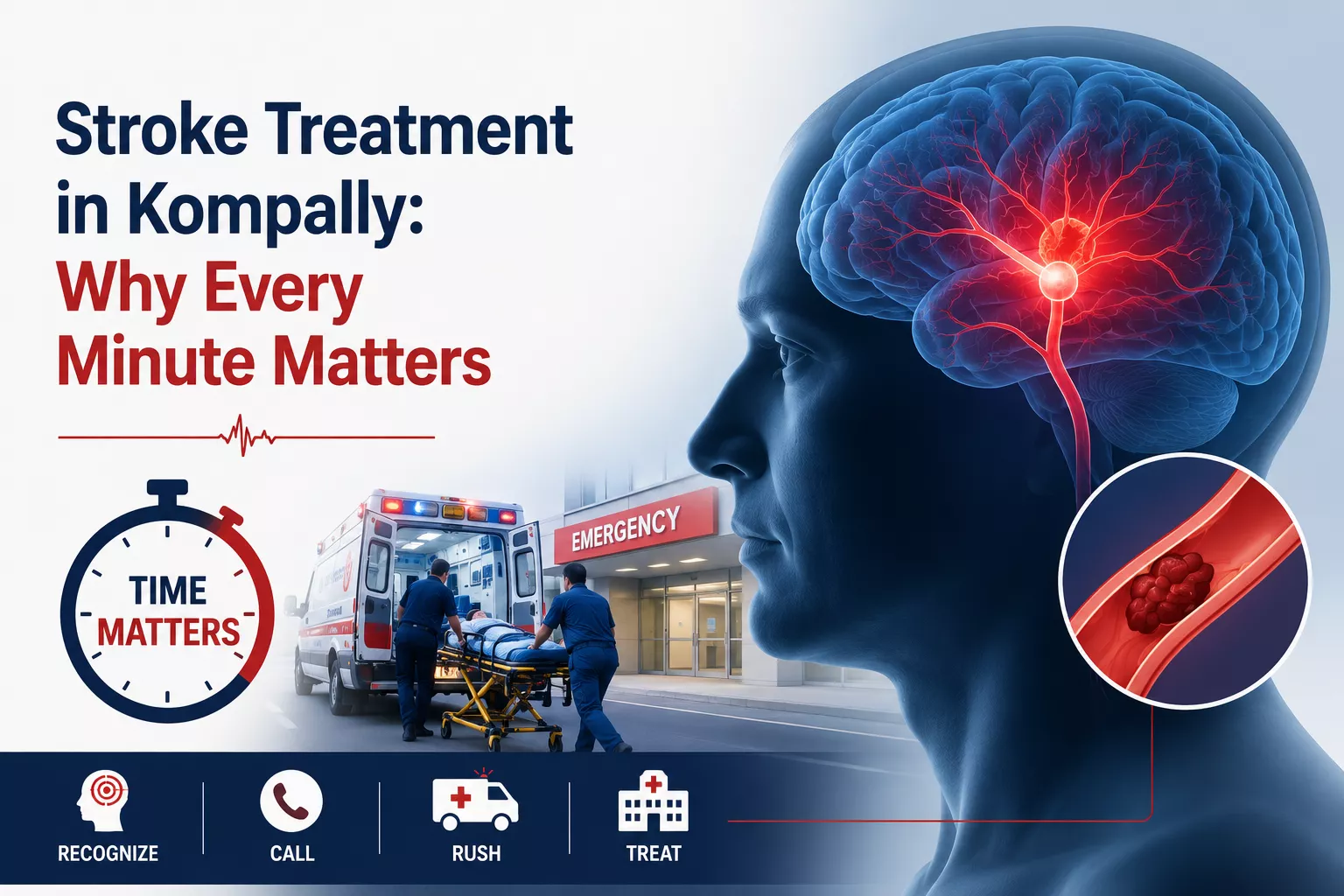
An ischaemic stroke is a rare but devastating event for the brain- since blood flow is absent, leading to millions of cells dying, every minute or so. These dead cells cannot grow back again, which is why delayed treatment results in major mental deficits and can lead to unwanted complications like paralysis or other symptoms.
Read on to understand the symptoms, so you can call us at Medone Hospitals- the best neuro hospital for stroke in Kompally right away, when there is an emergency!
Stoke Symptoms To Know Of
These are the symptoms which signal that a person may be having a stroke. There is no time to waste, you need to get them to a hospital immediately!
Remember the BEFAST acronym-
- B – If there is poor Balance and Coordination.
- E – If you notice that their eye/vision has changed, or their pupils do not look about the same size.
- F – Any drooping of one part of the face – where a person cannot smile fully is problematic.
- A – Loss of blood flow can cause the feet or hands on one side to get paralysed. If a person is not able to lift both their arms on top, and one begins to drift downwards instead of staying up, then they need help.
- S – Marked changes in speech patterns or not being able to remember words or form sentences like before.
- T – Time to call emergency medical services – it is NOW! NOT LATER!
What Happens In The Golden Hour For Stroke Treatment?
The first hour after a stroke is super crucial to overall health in the long term- since millions of cells die every minute there is no blood flow. Doctors work quickly to diagnose a stroke and administer emergency stroke care in Kompally, when you come to Medone Hospitals.
The two approaches doctors use to treat an ischaemic stroke include-
- The use of clot busting medications, to aid in the process of thrombolysis- i.e. breaking the clot down. If this drug is given within 4 hours of symptom onset, the clot can be dissolved faster and blood flow to the brain can be restored.
- Mechanical Thrombectomy- This is done within a day of symptom onset for the best results- and this procedure involves open surgery or catheterisation- to break and remove the clot in the affected blood vessel. Thrombolysing agents may also be used in conjunction with surgery. If you have open surgery, you will take longer to heal, while catheter based thrombectomies are minimally invasive and recovery period is much lower, with less associated risks of bleeding or infection.
What Factors Play A Role In Getting Delayed Stroke Treatment in Kompally?
Not knowing about the symptoms or what a stroke is, the seriousness of it and thinking it may be minor and can be safely ignored is a huge mistake. Some people may also feel bad about asking others for help or may not know who to call in emergencies.
Post-Stroke Rehabilitation and Care
A stroke can be hard to deal with and you may take a long time to feel normal or safe. The use of physical, occupational and speech therapy can greatly help you regain confidence, so that you can get back to your routine and become more independent than before.
Since dead cells don’t come back, deficits are to be expected- but you will get better, so follow the rehab regimen closely and talk to your doctor if you have any concerns. Never try to rush recovery!
Conclusion
Please understand what the BEFAST acronym means and commit it to your memory. A stroke can affect any one, at any time and it does not necessarily happen at the right place either. If you would like to consult a stroke specialist in Kompally, call us at Medone Hospitals today!
FAQs
A stroke occurs when blood flow to part of the brain is interrupted, causing brain cells to begin dying within minutes. Rapid medical intervention helps preserve brain function, reduce permanent damage, and improve the chances of recovery. Delayed treatment can lead to severe disability or life-threatening complications.
Common warning signs include sudden weakness or numbness on one side of the body, facial drooping, difficulty speaking or understanding speech, vision problems, dizziness, loss of balance, and severe headache. Immediate medical attention is essential if any of these symptoms occur.
Stroke treatment should begin as soon as possible after symptoms appear. Early treatment can restore blood flow to the brain, limit tissue damage, and significantly improve recovery outcomes. Every minute of delay increases the risk of permanent neurological injury.
Treatment depends on the type of stroke. Ischemic strokes may be treated with clot-dissolving medications or mechanical thrombectomy, while hemorrhagic strokes may require blood pressure management, specialized procedures, or surgery. Accurate diagnosis is essential to determine the appropriate treatment approach.
Many patients achieve significant recovery with timely treatment and rehabilitation. Recovery depends on factors such as the severity of the stroke, the area of the brain affected, overall health, and how quickly treatment was received. Early intervention provides the best opportunity for favorable outcomes.